If AI can provide information instantly, what becomes the role of a physical learning environment?
AI is changing how students access information.
Answers, explanations and research support are now available almost instantly. For schools and universities, this raises an important question: if information is no longer limited by access, what role does the physical learning environment play?
The answer lies in what AI cannot replace.
As technology makes knowledge easier to find, the value of human skills becomes even more important. Communication, collaboration, critical thinking, creativity and relationship-building are now central to the learning experience. These skills are developed through discussion, debate, teamwork and shared problem-solving - all of which depend on the quality of the spaces where they take place.
Why are Third Spaces becoming more important?
This shift is one reason Third Spaces are becoming increasingly important in education. Third Spaces sit between formal classrooms and social areas. They give students places to meet, work together, exchange ideas and continue learning outside structured teaching environments. In an AI-enabled world, these spaces support activities that are becoming increasingly valuable - collaboration, communication, problem-solving and peer-to-peer learning. They help turn information into understanding by creating opportunities for the human interactions that deepen learning.
Increasingly, Third Spaces are also recognised as places where students develop a sense of belonging within their educational community - an outcome closely linked to wellbeing, engagement and the overall student experience.
What makes a Third Space successful?
Successful Third Spaces are not created by furniture and technology alone. A flexible layout may encourage students to gather. Digital tools may support access to information. But the real challenge is creating an environment where multiple forms of learning can comfortably coexist. From quiet individual study to group collaboration and informal interaction, students need spaces that support different activities without one disrupting another.
To foster meaningful collaboration, students need to be able to communicate clearly, concentrate effectively and feel comfortable spending time in the space. This is where acoustics become critical.

How does acoustics influence learning and collaboration?
Sound has a direct impact on how people experience a learning environment.
If students cannot hear each other clearly, conversation becomes harder. If background noise builds, focus is reduced. If a space feels too loud or overwhelming, students may avoid using it altogether.
In environments designed for group work, discussion and peer-to-peer learning, poor acoustics can undermine the very activities the space was intended to support.
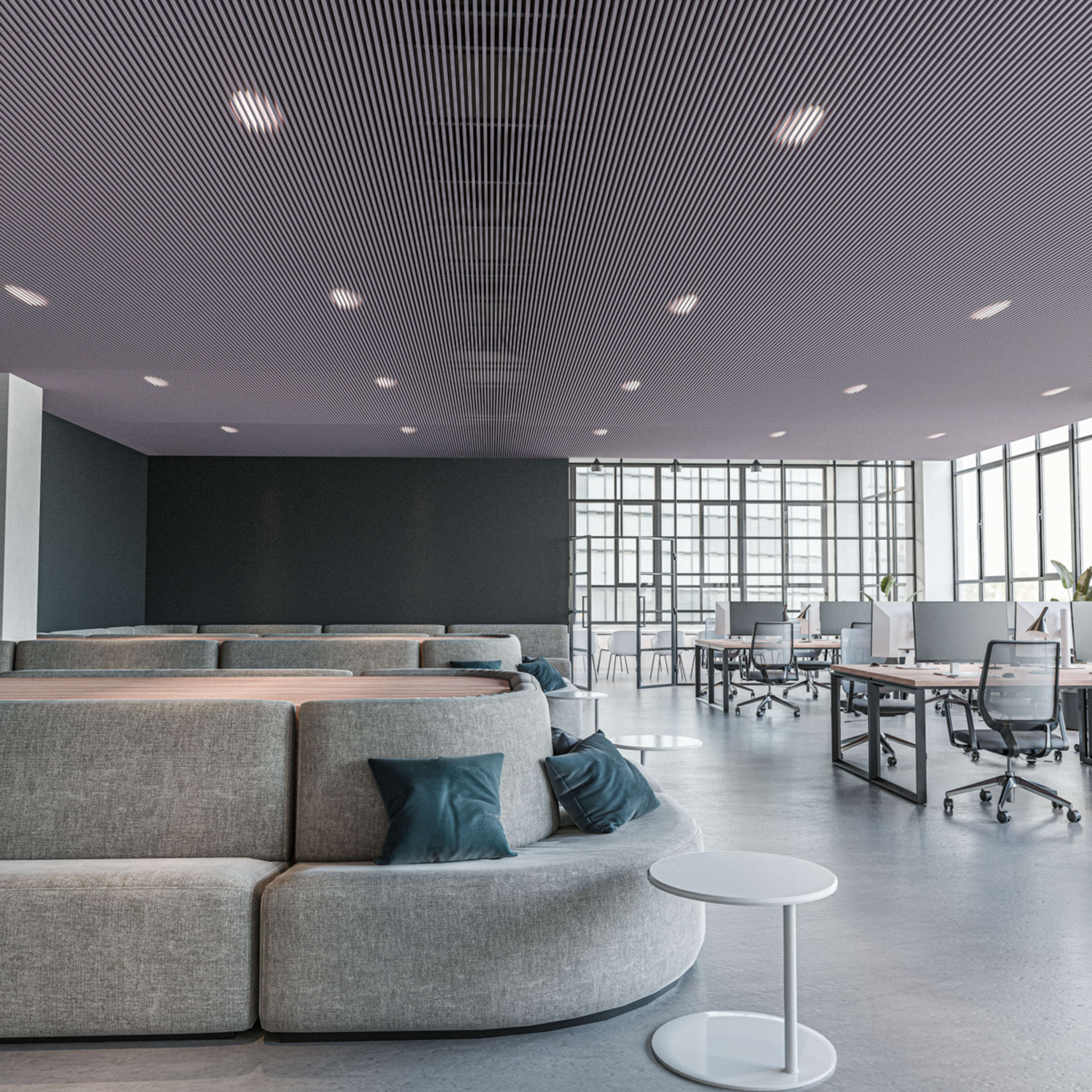
Supporting multiple forms of learning requires acoustic design that responds to how the space is used. Ceiling baffles, suspended acoustic elements and wall panels can be strategically integrated to improve speech clarity, manage reverberation and support different forms of learning - from quiet individual study to collaboration and informal interaction - creating environments where multiple activities can comfortably coexist.
Why are acoustics critical in the AI era?
Well-designed acoustic environments help Third Spaces perform as intended. They support clear communication, reduce distractions and create a more comfortable setting for collaboration.
As AI continues to transform access to information, the quality of human interaction becomes increasingly important. Acoustics are no longer just a technical consideration - they are a key design element that enables the communication, collaboration and critical thinking skills students need to develop.
The rise of AI does not make physical learning environments less relevant. It makes their purpose more specific.
When information is instantly available, the campus experience must provide something more: opportunities for connection, discussion and shared learning. Acoustics play a critical role in making those experiences successful.

How should learning spaces evolve for the future?
As education continues to evolve, schools and universities have an opportunity to design learning environments that respond to the AI era - not by competing with technology, but by supporting the human experiences technology cannot replace.
Creating spaces where students can communicate clearly, collaborate effectively and engage meaningfully with one another will be essential. And achieving that starts with designing environments that sound as good as they look.